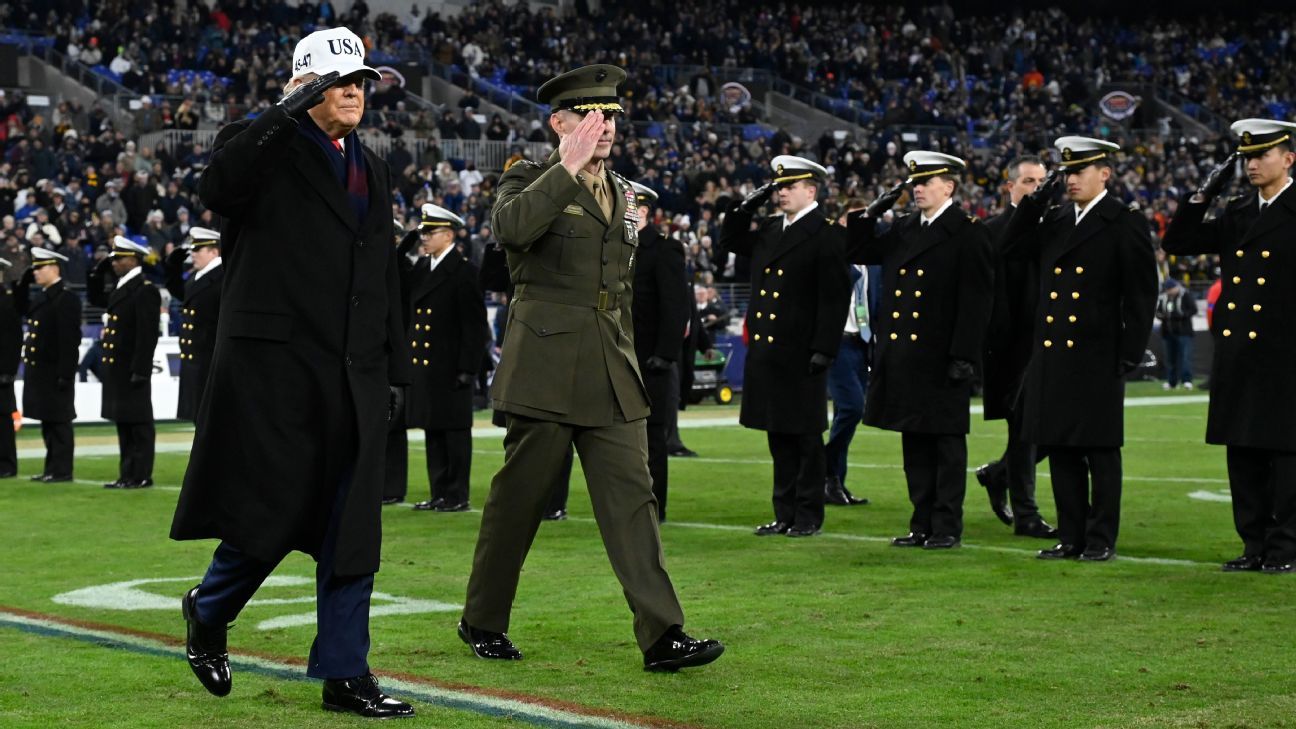
President Donald Trump has issued an executive order aimed at safeguarding the broadcast of the annual Army-Navy football game. This move specifically restricts the airing of the College Football Playoff and other postseason games during the December Army-Navy matchup, a tradition that draws significant national attention.
The executive order was announced amidst concerns over broadcasting rights and the potential for conflicts with other major sporting events. By issuing this order, Trump seeks to ensure that the Army-Navy game remains accessible to viewers without interference from competing broadcasts, emphasizing the importance of this historic rivalry.
The decision has sparked a variety of reactions from sports leagues, broadcasters, and fans. Supporters argue that it preserves the integrity and tradition of the Army-Navy game, which is one of the most storied rivalries in college football. Critics, however, contend that the order could disrupt the broadcasting landscape and set a precedent for government intervention in sports programming.
Historically, the Army-Navy game has been a symbol of patriotism and military service, often attracting large audiences across the country. The game is typically broadcast on major networks, and its scheduling has been carefully coordinated to maximize viewership and respect for the military tradition.
The executive order also raises questions about the broader implications for sports broadcasting rights and government influence in media. While the order is specific to the Army-Navy game, it signals a potential shift in how major sporting events are managed and protected from scheduling conflicts.
As the situation develops, stakeholders across the sports and broadcasting industries will be closely monitoring the impact of this executive action. The decision underscores the ongoing tension between commercial interests, tradition, and government involvement in American sports culture.